Category Archives: Uncategorized

How to Evaluate Links and Online Sources Responsibly

Links are among the basic building blocks of the internet, connecting readers with news reports, research papers, public records, services, and discussions. Yet a link alone does not guarantee that the destination is accurate, safe, or useful. Evaluating links carefully is an important part of digital literacy, particularly when online information influences health decisions, financial choices, public debate, or professional work.

Start with the destination

A link’s visible wording may provide a clue about its purpose, but the destination address usually offers more evidence. Look at the domain name and consider whether it belongs to a recognized institution, a company, an individual publisher, or an unfamiliar service. A secure connection, indicated by “https” in the address, helps protect data in transit, although it does not prove that the content itself is trustworthy.

It is also useful to examine the full address before opening it. Misspelled domains, unusual subdomains, excessive punctuation, and unfamiliar file extensions can indicate an attempt to imitate a legitimate website. Shortened links deserve additional caution because they conceal the final destination until the link is opened.

Assess the information behind the link

Once a page is open, identify who produced it and why. Reliable publishers usually provide an author, organization, publication date, contact details, and an explanation of their methods or sources. These features are not absolute guarantees, but their absence can make claims harder to verify.

Pay attention to the distinction between evidence and opinion. A page may present confident language without offering data, citations, or links to primary material. Stronger sources explain how conclusions were reached and acknowledge meaningful limitations. Readers should also check whether a cited study actually supports the claim being made, rather than assuming that any reference adds credibility.

Compare claims across independent sources

One page can be incomplete or mistaken, even when it appears professional. Comparing important claims with independent sources helps reveal missing context, outdated information, and disagreements among experts. Government agencies, universities, professional associations, libraries, and established news organizations can provide useful points of comparison, depending on the subject.

Independence matters because several pages may repeat the same claim without conducting separate research. Trace a statement back to its earliest identifiable source when possible. A widely repeated statistic is not necessarily reliable if every publication copied it from an unverified post.

Check links before publishing or sharing

People who create websites, newsletters, reports, and social posts have an additional responsibility: they should verify that links work and lead to the intended material. A basic test should confirm that the address loads, the page is relevant, and the content remains available without unexpected downloads or requests for sensitive information.

In a development or editorial workflow, a simple placeholder can also be used to test how a link behaves in a page layout: test This kind of check can identify formatting problems, misleading labels, or accessibility issues before publication. Every link should have descriptive visible text, rather than relying on vague wording that gives readers no indication of what they will find.

Consider accessibility and privacy

Good linking practices should work for people using screen readers, keyboard navigation, mobile devices, and slower connections. Descriptive link text provides context when links are read out of sequence, while clear headings and concise surrounding sentences make pages easier to scan.

Privacy is another consideration. Some links contain tracking parameters that record where a visitor came from or identify a campaign. Tracking is not automatically improper, but publishers should use it transparently and avoid exposing personal information in URLs. Readers should be cautious when a page requests credentials, payment details, or unnecessary permissions.

Pause before sharing

Responsible link use is ultimately a habit of verification. Check the destination, examine the publisher, compare important claims, and consider the risks to privacy and security. A short pause before opening or sharing a link can prevent confusion and reduce the spread of inaccurate information. In a crowded digital environment, careful evaluation remains one of the simplest ways to make online communication more dependable.

iSunshare Excel Password Genius Portable exe (x86x64) [Latest]

Poster
🧮 Hash-code: 8d84c7fd7e1af84a65f8f486c021605a • 📆 2026-09-19


  • Processor: 1 GHz CPU for patching
  • RAM: 4 GB for crack use
  • Disk space: 64 GB for setup

Unlocking Excel Passwords with Ease

iSunshare Excel Password Genius is a powerful tool that helps users recover or remove passwords from Excel files, making it an essential tool for anyone who has lost access to their Excel files due to a forgotten password. With its user-friendly interface, this software is perfect for both novice and advanced users alike, ensuring that everyone can unlock their Excel files without any hassle.

Multiple Password Recovery Methods

The software supports all versions of Microsoft Excel and offers multiple password recovery methods, including:• Brute-force attack: a time-consuming but reliable method that tries every possible combination of characters• Dictionary attack: a faster method that uses a list of words to guess the password• Mask attack: a method that uses a combination of characters to guess the password

Key Features and Benefits

• Supports all versions of Microsoft Excel• Multiple password recovery methods for increased flexibility• User-friendly interface for easy navigation and use• Ideal for users who have forgotten their Excel passwords or need to access protected files

Who Needs iSunshare Excel Password Genius?

• Users who have lost access to their Excel files due to a forgotten password• Business owners who need to access sensitive data stored in Excel files• Individuals who need to collaborate on Excel files but have forgotten their passwords

What to Expect from iSunshare Excel Password Genius

By using iSunshare Excel Password Genius, you can expect to recover your Excel passwords quickly and easily, without having to resort to expensive and time-consuming methods. The software is designed to be user-friendly, making it accessible to both novice and advanced users.

Additional Tips and Considerations

• Always make sure to back up your Excel files regularly to avoid losing any important data• Use strong and unique passwords for all your Excel files to prevent unauthorized access• Consider using password managers to securely store and generate complex passwords

Unlock Your Excel Files with Confidence

iSunshare Excel Password Genius is a reliable and efficient tool that can help you recover your Excel passwords and access your files with confidence. With its user-friendly interface and multiple password recovery methods, this software is an essential tool for anyone who needs to access Excel files.

  1. Keygen generator with batch serial number creation
  2. iSunshare Excel Password Genius License[Activated] Latest
  3. Patch disables license expiration and update checks
  4. iSunshare Excel Password Genius Portable only Full (x64) [Latest] GitHub
  5. License key backup and restore tool with encryption support
  6. iSunshare Excel Password Genius Crack tool [Windows] [x32x64] Final 2026 FREE
  7. Updated keygen for compatibility with latest update
  8. iSunshare Excel Password Genius Portable + Keygen Final [x32-x64] [no Virus] Multilingual FREE

Qoppa PDF Studio Portable exe (x86x64) [Latest]

Poster
🧮 Hash-code: 1e700cc38fcab1a89ff49e99500257ff • 📆 2026-09-19


  • Processor: 1 GHz CPU for patching
  • RAM: 4 GB for crack use
  • Disk space: 64 GB for setup

Unlocking the Full Potential of PDF Documents with Qoppa PDF Studio

Qoppa PDF Studio is a powerful tool for professionals and businesses seeking to manage and create PDF documents with ease. By harnessing the capabilities of this software, users can streamline their workflow, enhance productivity, and ensure the integrity of their documents. With its robust features and user-friendly interface, Qoppa PDF Studio has established itself as a top choice among those seeking a reliable PDF management solution.

Key Features and Benefits

  • Optical Character Recognition (OCR) technology for accurate document conversion
  • Form filling and batch processing capabilities for streamlined workflow
  • Secure document handling and encryption for sensitive information
  • Integration with cloud services for seamless collaboration

Technical Specifications

Feature Description
System Requirements Windows 10/8/7 (64-bit) or macOS 10.13 or later
License Model Perpetual license with optional subscription plans

Q&A Section

  1. Q: What is Qoppa PDF Studio used for?
  2. A: Qoppa PDF Studio is designed for professionals and businesses to manage and create PDF documents with ease.
  3. Q: Does Qoppa PDF Studio support cloud integration?
  4. A: Yes, Qoppa PDF Studio offers seamless integration with cloud services for collaboration and workflow management.
  5. Q: What are the system requirements for Qoppa PDF Studio?
  6. A: Qoppa PDF Studio is compatible with Windows 10/8/7 (64-bit) or macOS 10.13 or later.

Qoppa PDF Studio is a robust PDF editing and management software designed to cater to the needs of professionals and businesses. With its extensive features, user-friendly interface, and cost-effective perpetual license model, it has established itself as a top choice among those seeking reliable PDF solutions.

  1. Product key recovery utility featuring intuitive user interface
  2. Qoppa PDF Studio Crack only Windows 10 (x86x64) [Clean] 2026 FREE
  3. Activation key tool compatible with multiple license types
  4. Qoppa PDF Studio Portable only [Lifetime] x86x64 [Windows] FREE
  5. Keygen supporting latest Windows and macOS versions
  6. Qoppa PDF Studio Crack (x32-x64) Full Instant FREE
  7. Free product key finder for installed apps
  8. Qoppa PDF Studio Pre-Activated [Patch] (x32-x64) Premium FREE
  9. License key removal and reactivation tool available
  10. Qoppa PDF Studio Portable + Crack 100% Worked Lifetime Premium
zombie books for kids, gift for kids

Little Zombies Books: The Perfect Gift

The holiday season is here, and finding the perfect gift for the young readers in your life can be challenging. This Christmas, consider giving the gift of adventure and imagination with the “Little Zombies” book series. Little Zombie books are the perfect gift for kids. These charming stories offer everything parents want and kids love, wrapped up in delightfully spooky packages that will keep children engaged long after the decorations come down.

Why Little Zombie Books Make Wonderful Christmas Gifts

Lasting value: Unlike toys that break or lose their appeal, books can be enjoyed again and again.

Screen-free entertainment: Books provide a healthy alternative to electronic devices.

Educational benefits: Reading strengthens vocabulary, comprehension, and critical thinking skills.

Quality time: Reading together creates precious bonding moments between parents and children.

What Makes Little Zombies Books Special Holiday Gifts

The “Little Zombies” series stands out as an exceptional Christmas gift for kids:

Unique and memorable: Friendly zombie characters offer something different from typical children’s books.

Perfect for cozy winter reading: These adventure stories are ideal for snuggling up during cold winter days.

Appeals to reluctant readers: The fun, spooky twist captures the attention of children who might otherwise resist reading.

Series potential: Starting with one book can lead to a collection that extends the joy throughout the year.

Age-Appropriate Zombie Adventure

“Little Zombies” books strike the perfect balance between exciting and age-appropriate. The gentle spookiness adds just enough thrill without nightmares, making them suitable for elementary-aged children who are ready for something beyond picture books but not quite ready for intense scary stories.

Stocking Stuffer or Main Present?

These books work beautifully as either:

Main gifts: Pair several books from the series together for an impressive present.

Stocking stuffers: Individual books fit perfectly in Christmas stockings.

Combination gifts: Bundle a “Little Zombies” book with a cozy blanket or reading light for the ultimate reading package.

Building Traditions Around Little ZombieBooks

Starting a Christmas book tradition creates lasting memories:

Christmas Eve reading: Make it a tradition to read a new “Little Zombies” adventure together on Christmas Eve.

Annual additions: Add a new book from the series each Christmas to build anticipation.

Book exchange: Encourage extended family to give books as gifts to foster a shared reading culture.

Perfect for Various Gift-Giving Situations

“Little Zombies” books work wonderfully for:

Children on your list: Nieces, nephews, grandchildren, and family friends.

Classroom gifts: Teachers appreciate quality books for their classroom libraries.

Secret Santa exchanges: Affordable yet thoughtful options for school or community gift swaps.

Charitable giving: Donate to toy drives or children’s hospitals to spread reading joy.

Little Zombie Books Beyond Entertainment

While kids enjoy the adventures, parents appreciate the hidden benefits:

Encourages independent reading habits

Teaches problem-solving and teamwork

Builds confidence in reading abilities

Provides conversation starters about friendship and courage

Making the Gift Extra Special

Enhance your “Little Zombies” book gift with these thoughtful touches:

Personal inscription: Write a message on the inside cover about why you chose this book.

Reading accessories: Include bookmarks, book lights, or reading journals.

Themed wrapping: Use spooky but fun wrapping paper that hints at the adventure inside.

Gift certificate: Add a note promising special reading time together.

A Gift That Keeps Giving

Unlike many Christmas presents that provide brief entertainment, “Little Zombies” books offer:

Multiple readings: Children often want to revisit favorite stories.

Growing skills: As kids reread, they discover new details and improve their reading abilities.

Sharing opportunities: Books can be passed to siblings, friends, or donated when outgrown.

Future nostalgia: These books may become cherished memories your children treasure into adulthood.

Conclusion

This Christmas, give a gift that sparks imagination, encourages reading, and provides countless hours of entertainment. “Little Zombies” books combine adventure, humor, and gentle spookiness in stories that children genuinely want to read. Whether you’re shopping for your own kids, grandchildren, or young friends, these books offer the perfect blend of fun and educational value. Skip the toys that will be forgotten by New Year’s and choose a “Little Zombies” book instead—it’s a gift that will be remembered, reread, and treasured for years to come. Make this holiday season special with the gift of a reading adventure! Little Zombie books are a perfect gift for kids.

Little Zombies books spark conversations

Little Zombies Books Spark Meaningful Conversations

Reading together is wonderful, but the real magic happens when you close the book and start talking. “Little Zombies” books for kids offer rich opportunities for engaging conversations that boost language development, critical thinking, and emotional intelligence. Let’s explore how these charming stories can become springboards for meaningful discussions with young readers.

The Power of Interactive Reading

Simply reading aloud is valuable, but interactive reading takes the experience to another level. When you pause to discuss characters, analyze illustrations, and explore themes, you transform story time into a powerful learning opportunity. “Little Zombies” books are perfectly designed for this approach, with relatable characters and detailed illustrations that invite exploration.

Getting to Know the Characters in “Little Zombies” Books for Kids

The little zombie characters in these books may be undead, but they face very real childhood experiences. Use these questions to spark character discussions:

        • “What do you think this character is feeling right now? How can you tell?”
        • “If you were friends with this little zombie, what would you do together?”
        • “Which character do you think you’re most like? Why?”
        • “How would you have handled this problem differently?”

These conversations help children develop empathy and self-awareness as they compare themselves to the characters and think about different perspectives.

Finding Similarities and Differences

One of the delights of “Little Zombies” is that these characters are just like regular kids—they just happen to be zombies. This creates fascinating opportunities for comparison:

“Even though they’re zombies, what makes them just like you and your friends?”

“What problems do they face that you’ve experienced too?”

“How are their friendships similar to yours?”

“What’s different about their world compared to ours?”

These discussions help children understand that differences (like being a zombie!) don’t prevent friendship, cooperation, and fun—a valuable lesson in acceptance and diversity.

The Art of Observation: Exploring Illustrations in “Little Zombies” Books for Kids

“Little Zombies” books feature engaging illustrations that reward careful attention. Encourage visual literacy with these activities:

“Look closely at this character’s face. What emotion do you see?”

“What details do you notice in the background?”

“How does the illustrator show that it’s nighttime/scary/exciting?”

“Can you find something in this picture that wasn’t mentioned in the words?”

Taking time to examine illustrations develops observation skills, visual literacy, and attention to detail—all crucial for academic success.

Understanding Setting and Atmosphere

The settings in “Little Zombies” books create the perfect atmosphere for gentle spookiness. Discuss how the illustrator and author work together:

“What makes this place look spooky but not too scary?”

“How would you feel if you were in this setting?”

“What sounds do you think the characters hear here?”

“If you could add something to this scene, what would it be?”

These questions help children understand how stories create mood and atmosphere, building literary comprehension skills.

Language Development Through Discussion

Every conversation about “Little Zombies” books contributes to language growth:

Vocabulary expansion: Introduce words like “courageous,” “determined,” or “mischievous” when describing characters.

Sentence complexity: Encourage children to explain their thinking with “because” statements.

Descriptive language: Ask kids to use adjectives when discussing illustrations and characters.

Narrative skills: Have them retell parts of the story in their own words.

Building Critical Thinking Skills

Move beyond simple comprehension with deeper questions:

“Why do you think the character made that choice?”

“What do you predict will happen next?”

“Was there another way to solve this problem?”

“What would you do if you were the author? Would you change anything?”

These questions teach children to analyze, evaluate, and think creatively about stories.

Connecting “Little Zombies” Books for Kids to Real Life

Help children bridge the gap between fiction and their own experiences:

“Have you ever felt brave like this character?”

“When have you worked with friends to solve a problem?”

“What’s a time you felt scared but did something anyway?”

“How do you help your friends when they’re worried?”

These connections make stories personally meaningful and help children apply lessons to their own lives.

Activities to Extend the Conversation about “Little Zombies” Books for Kids

Go beyond verbal discussion with these engaging activities:

Character drawing: Ask children to draw their favorite character and explain why they chose them.

Scene recreation: Have kids act out a favorite scene, exploring how characters move and speak.

Alternative endings: Encourage children to imagine and share different ways the story could end.

Personal connections: Create a chart comparing the child’s characteristics with their favorite little zombie.

Age-Appropriate Discussion Strategies

Tailor your approach to your child’s developmental level:

For younger children (ages 5-7):

Focus on identifying emotions in illustrations

Ask simple “what” and “who” questions

Encourage pointing to details in pictures

Keep discussions brief and playful

For older children (ages 8-10):

Explore character motivations and complex emotions

Discuss cause and effect in the plot

Compare multiple characters’ perspectives

Encourage predictions based on evidence

Creating a Discussion-Friendly Environment

Make story discussions enjoyable and pressure-free:

No wrong answers: Value all contributions and interpretations.

Follow their lead: Let children’s interests guide the conversation.

Share your thoughts: Model thoughtful analysis by sharing your own observations.

Keep it natural: Discussions don’t need to be formal—chat naturally about what interests you both.

The Long-Term Benefits

Regular story discussions using “Little Zombies” books help children develop:

Stronger communication skills

Enhanced reading comprehension

Greater emotional intelligence

Improved critical thinking abilities

Deeper love of reading

Closer parent-child bonds

Making It a Habit

Incorporate discussion into your reading routine:

Choose one or two questions per reading session—don’t overwhelm.

Revisit favorite books with new discussion questions.

Let children ask you questions about the story too.

Celebrate their insights and observations.

Conclusion

“Little Zombies” books offer far more than entertaining stories—they’re tools for building language skills, critical thinking, and emotional intelligence. By taking time to discuss characters, examine illustrations, and explore themes together, you transform reading time into powerful learning experiences. These friendly zombie characters provide the perfect starting point for conversations that help children understand themselves, develop empathy, and see the world in new ways. So next time you read a “Little Zombies” adventure, don’t just close the book when you finish—that’s when the real conversation begins!

diverse characters in children's books, zombies for kids, zombie books for kids

Beyond Princesses: Diverse Characters in Children’s Books

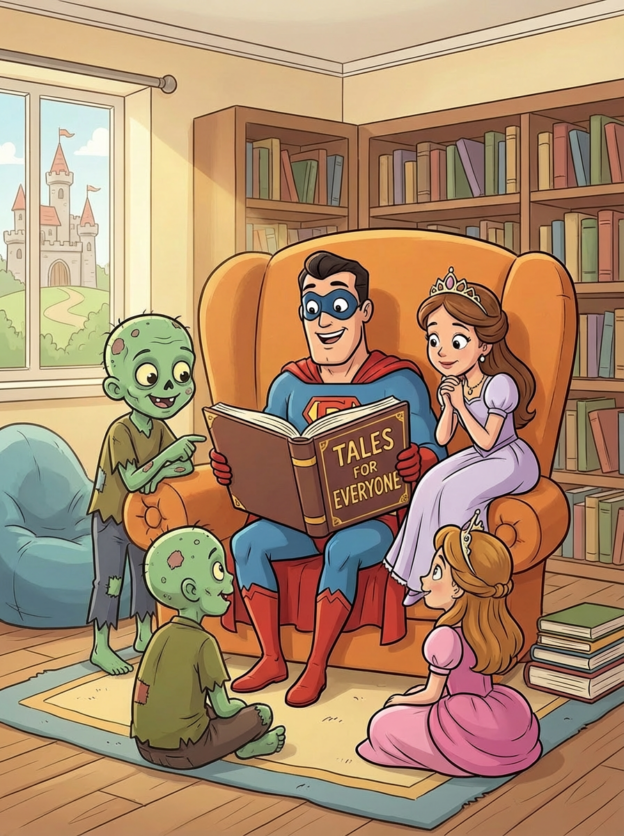
Walk into any children’s bookstore, and you’ll see shelves filled with princesses waiting to be rescued and superheroes saving the world. While these classic characters have their place, children’s literature thrives when it offers a wider range of protagonists. Enter the “Little Zombies” series—a refreshing alternative that proves heroes come in all forms, even undead ones. Let’s explore why diverse characters in children’s books matter and how unconventional protagonists like little zombies enrich young readers’ experiences.

The Limitation of Traditional Character Types

Princesses and superheroes dominate children’s media for good reason—they’re exciting, aspirational, and familiar. However, an exclusive diet of these characters can inadvertently limit children’s understanding of heroism, problem-solving, and identity.

Traditional character types often follow predictable patterns:

        • Princesses typically need saving or focus primarily on appearance and romance
        • Superheroes rely on special powers rather than teamwork and creativity
        • Both often represent narrow definitions of beauty, strength, and success

    While these stories entertain, they don’t always reflect the complexity of real childhood experiences or the diverse ways people can be brave, kind, and successful.

    What Makes a Character “Diverse”?

    Character diversity goes beyond race, gender, or background—though those are important too. Diverse characters in children’s books include:

              • Unconventional protagonists who challenge stereotypes
              • Characters with unique abilities, perspectives, or challenges
              • Heroes who succeed through collaboration rather than individual power
              • Protagonists who look, think, or behave differently from typical storybook characters

          The little zombies fit beautifully into this category. They’re not your typical heroes, yet they demonstrate courage, friendship, and problem-solving in every adventure.

          Why Little Zombies Are Refreshingly Different

          They’re Unexpected Heroes

          Zombies are traditionally portrayed as scary monsters, not protagonists children can relate to. By flipping this script, “Little Zombies” books challenge children to look beyond appearances and preconceptions. If a zombie can be friendly, helpful, and brave, what else might be different from what we assume?

          They’re Relatable Despite Being Different

          Here’s the magic: these little zombies face the same challenges as regular kids. They work through problems with friends, navigate tricky situations, and learn valuable lessons—all while being undead. This combination teaches children that being different doesn’t mean being less capable or less worthy of friendship.

          They Succeed Through Teamwork

          Unlike superheroes with individual powers, the little zombies typically work together to overcome obstacles. This models real-world problem-solving and emphasizes collaboration over competition—a valuable lesson for young readers.

          They’re Gentle, Not Scary

          The “Little Zombies” series proves you can have spooky elements without frightening content. These zombies are approachable and kind, showing children that “different” or “unusual” doesn’t automatically mean “dangerous” or “bad.”

          The Benefits of Diverse Character Exposure

          Expands Imagination

          When children encounter protagonists beyond the princess-superhero binary, their creative thinking expands. They begin imagining stories where anyone—even a zombie—can be the hero. This flexibility in thinking extends beyond reading into creative play, problem-solving, and social interactions.

          Builds Empathy and Acceptance

          Reading about characters who look or act differently helps children develop empathy. When kids root for zombie protagonists, they practice seeing the world from an unfamiliar perspective. This translates into greater acceptance of real-world differences among their peers.

          Challenges Gender Stereotypes

          Traditional princess and superhero narratives often reinforce rigid gender roles. Diverse characters like the little zombies can transcend these limitations, showing that adventure, bravery, and friendship aren’t gender-specific traits.

          Reflects Real-World Diversity

          Children encounter all kinds of people in their lives—different appearances, abilities, backgrounds, and personalities. Books with diverse characters help them understand and celebrate this variety rather than view difference as something strange or uncomfortable.

          Encourages Self-Acceptance

          Not every child identifies with princesses or superheroes. Some kids are quirky, unconventional, or feel like they don’t fit typical molds. Characters like little zombies send a powerful message: you don’t have to be traditional or typical to be special, valuable, and capable of great things.

          What Kids Learn from Little Zombies

          Difference Is Normal and Okay

          The little zombies normalize being different. Children learn that everyone has unique qualities, and those differences make life interesting rather than problematic.

          Appearance Doesn’t Define Worth

          Despite being zombies (not traditionally cute or beautiful), these characters are lovable and admirable. This helps children understand that worth comes from character, not appearance.

          Problems Can Be Solved in Many Ways

          Without superpowers to rely on, the little zombies use creativity, cooperation, and persistence. Children see that there are multiple approaches to challenges—not just one “powerful” solution.

          Friendship Transcends Differences

          The little zombies’ friendships show that connections form around shared values and experiences, not similarity in appearance or background.

          Bravery Comes in Many Forms

          Courage isn’t just about fighting villains or saving kingdoms. The little zombies demonstrate everyday bravery—trying new things, helping friends, and facing fears. This makes heroism accessible to all children.

          Beyond the Book: How Diverse Characters in Children’s Books Shape Children

          In Social Development

          Children who read about diverse characters often show greater social flexibility. They’re more likely to befriend peers who are different from them and less likely to exclude others based on superficial differences.

          In Self-Concept

          Exposure to various types of protagonists helps children develop more nuanced self-concepts. They learn there are many ways to be smart, brave, funny, or kind—not just the ways shown in traditional stories.

          In Creative Expression

          Kids who encounter diverse characters create more varied stories in their own play and writing. Their imaginary worlds become richer and more inclusive.

          In Problem-Solving

          Seeing characters approach challenges in different ways expands children’s problem-solving toolkit. They learn that there’s rarely just one “right” way to handle a situation.

          Balancing Traditional and Diverse Characters in Children’s Books

          This isn’t about eliminating princesses and superheroes from children’s lives—it’s about balance. A well-rounded reading diet includes:

          Traditional favorites that provide comfort and familiarity
          Diverse characters that challenge assumptions and expand perspectives
          A variety of settings, conflicts, and resolutions
          Characters of different backgrounds, abilities, and personality types

          “Little Zombies” books offer that important balance, complementing rather than replacing other beloved stories.

          Starting the Conversation

          When sharing “Little Zombies” books with children, enhance the experience with questions like:

          “What makes these zombies different from zombies in other stories?”

          “How are the little zombies similar to you and your friends?”

          “What would you tell someone who thought zombies were too scary to be friends with?”

          “What makes someone a hero in this story?”

          These discussions help children process and internalize the lessons about diversity and acceptance.

          The Bigger Picture

          Diverse characters in children’s books do more than entertain—they shape how the next generation views difference, solves problems, and treats others. By choosing books like “Little Zombies” alongside traditional favorites, parents and educators provide children with a richer, more realistic view of the world.

          When a child sees that even a zombie can be a hero, they learn that heroism isn’t about fitting a specific mold. It’s about courage, kindness, and character—qualities available to everyone, regardless of how they look or where they come from.

          Conclusion

          Princesses and superheroes will always have their place in children’s hearts and bookshelves, and that’s perfectly fine. But children deserve—and need—exposure to a wider range of characters and stories. “Little Zombies” books offer something refreshingly different: protagonists who challenge expectations, demonstrate diverse forms of heroism, and prove that being unusual is actually pretty wonderful.

          By expanding our children’s literary horizons beyond traditional character types, we’re not just making reading more interesting—we’re helping raise a generation that celebrates difference, thinks creatively, and understands that heroes come in all forms. Even zombie form. Give your child the gift of diverse characters, starting with the delightfully unexpected little zombies. You might be surprised at how these unconventional heroes become their new favorites.

Screen time alternatives for kids- Little Zombie books, zombie books for kids, adventure books for kids

Screen Time Alternatives for Kids: Little Zombie Books

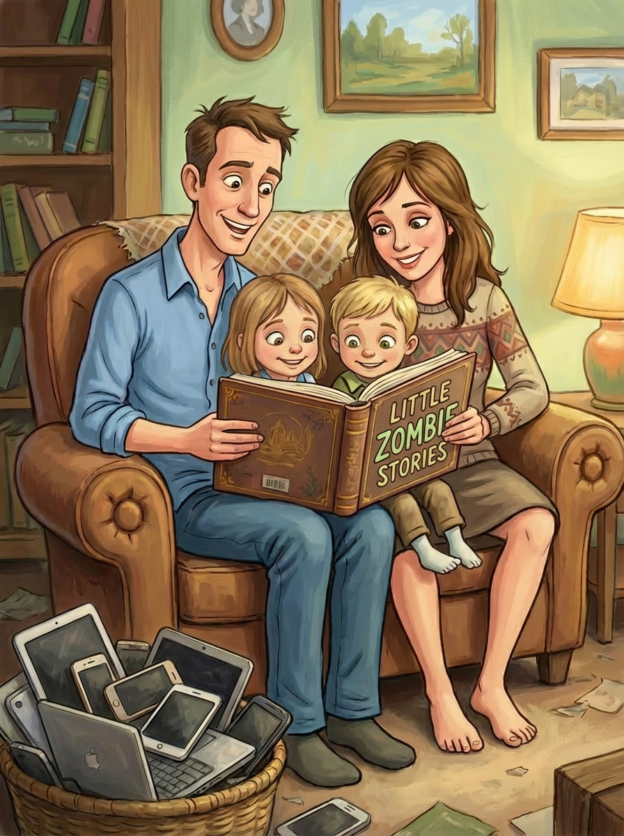
In today’s digital world, screens are everywhere—tablets, phones, computers, televisions. While technology has its place, many parents worry about excessive screen time and its impact on children’s development. The good news? Screen time alternatives for kids- “Little Zombie” books. Our books offer an engaging, screen time alternative for kids. Let’s explore how to make reading these adventures a natural, appealing part of your family’s daily routine.

Understanding the Screen Time Challenge

Before diving into solutions, it’s worth acknowledging why screen time is so appealing to children—and so challenging for parents to limit.

Why Kids Love Screens:

Instant gratification and constant stimulation

Interactive elements and immediate feedback

Bright colors and engaging sounds

No effort required—passive entertainment

Social connection through games and apps

Why Parents Worry:

Reduced physical activity and outdoor play

Less face-to-face social interaction

Potential sleep disruption

Limited creative and imaginative play

Concerns about content quality and appropriateness

The key isn’t eliminating screens entirely but finding balance with enriching alternatives that children genuinely want to engage with.

Why Books Work as Screen Time Alternatives for Kids

Reading offers benefits that screens simply cannot provide:

Active engagement—children must use imagination to bring stories to life

Language development through rich vocabulary exposure

Improved focus and attention span

Better sleep quality when reading before bed

Bonding opportunities when reading together

No blue light exposure affecting sleep patterns

Complete control over content and pacing

“Little Zombies” books are particularly effective screen time alternatives for kids because they combine the excitement kids crave with the developmental benefits parents value.

The Little Zombies Advantage

What makes these books especially appealing as screen-time replacements?

Visual Appeal: The illustrations in “Little Zombies” books provide visual stimulation similar to screens but require active mental engagement rather than passive consumption.

Adventure and Excitement: The stories deliver the action and adventure kids enjoy in games and shows, but through imaginative storytelling that develops creativity.

Just-Right Spookiness: The gentle spooky element captures attention and creates excitement without being frightening—striking that perfect balance kids love.

Manageable Length: The books are long enough to be satisfying but short enough to hold attention, making them perfect for fitting into daily routines.

Series Appeal: Like binge-watching a favorite show, kids can follow the little zombies through multiple adventures, creating anticipation for the next book.

Creating a Daily Reading Routine

The key to replacing screen time with reading is making it a consistent, appealing part of your day. Here’s how:

Morning Reading Time

Instead of morning cartoons, try:

Wake-up story: Keep a “Little Zombies” book on the nightstand for 10-15 minutes of reading before getting out of bed

Breakfast reading: Place a book at the breakfast table for reading while eating

Getting-ready incentive: “When you’re dressed and ready, we’ll read a chapter together”

Making it work: Start with just 10 minutes and gradually increase as the habit forms. The key is consistency—same time, same place, every day.

After-School Wind-Down

Replace screen time snacking with:

Snack-and-story time: Pair healthy snacks with a “Little Zombies” adventure

Decompression reading: Let kids independently read for 20 minutes to transition from school mode to home mode

Read-aloud while preparing dinner: You read while they listen and perhaps help with simple meal prep

Making it work: Create a cozy reading nook with comfortable seating, good lighting, and easy access to books. Make it more inviting than the TV corner.

Evening Routine

Transform screen time into story time:

Pre-dinner reading: “We have 30 minutes until dinner—let’s see what adventure the little zombies have today”

Bath time alternative: Read while they soak in the tub (waterproof books or careful handling!)

Bedtime ritual: Replace evening TV or tablet time with 20-30 minutes of reading together

Making it work: Bedtime reading is often easiest to establish because it naturally calms children down, unlike screens which can stimulate and disrupt sleep.

Weekend Reading Adventures

Replace weekend screen binges with:

Saturday morning reading marathon: Make it special with hot chocolate and cozy blankets

Reading picnics: Take “Little Zombies” books to the park or backyard

Rainy day reading parties: Create a reading fort with pillows, blankets, and snacks

Library trips: Visit the library weekly, but bring your “Little Zombies” books along for reading there

Making it work: Make reading feel like a special event, not a chore. Add elements that make it fun and different from weekday routines.

Strategies for Successful Transition to Screen Time Alternatives for Kids

Moving from screens to books takes strategy. Here’s how to make the transition smooth:

Start Small

Don’t eliminate all screen time overnight. Begin by replacing one screen session per day with reading time. Gradually increase as the habit strengthens.

Create Rituals

Make reading time special with consistent elements:

Special reading spot with comfortable seating

Reading snacks (fruit, crackers, water)

Cozy blanket or stuffed animal

Dimmed lights or natural lighting

Quiet background music (optional)

Offer Choices

Let children choose which “Little Zombies” book to read from your collection. Autonomy increases engagement and reduces resistance.

Read Together Initially

Even if your child can read independently, shared reading time makes it more appealing than solitary screen time. Gradually transition to independent reading as the habit forms.

Use Timers Positively

Instead of “no screens for 30 minutes,” frame it as “reading time for 30 minutes, then you can choose what to do next.” This focuses on what they’re gaining rather than what they’re missing.

Making Reading More Appealing Than Screens

Add Interactive Elements:

Act out scenes from “Little Zombies” books

Draw favorite characters or scenes after reading

Discuss the story—what would you do in that situation?

Create predictions about what happens next

Build Anticipation:

Keep some books “special” and only available at certain times

Introduce new “Little Zombies” books as exciting events

Create a reading challenge or chart to track progress

Let children earn new books as rewards

Make It Social:

Read with siblings or friends

Start a neighborhood “Little Zombies” book club for kids

Video call grandparents to tell them about the story

Share favorite parts with family at dinner

Enhance the Experience:

Use different voices for characters

Add simple props or costumes related to the story

Create themed snacks based on the book

Make a “Little Zombies” reading corner with zombie decorations

Addressing Common Challenges

“But they say reading is boring!”

This usually means they haven’t found the right books yet. The adventure and gentle spookiness of “Little Zombies” often hooks reluctant readers. Start with short reading sessions and gradually increase.

“They sneak screens anyway”

Make screens less accessible during designated reading times. Put devices in a drawer or different room. Replace easy screen access with easy book access—leave “Little Zombies” books in multiple locations.

“I don’t have time to read with them”

Start with just 10 minutes. Even busy parents can find 10 minutes. As the routine establishes, you can decide whether to continue shared reading or transition to independent reading time.

“Siblings have different reading levels”

“Little Zombies” books can work for a range of ages. Younger children enjoy the pictures and story when read aloud, while older children can read independently. Choose books that work for the middle ground.

“They resist anything that isn’t screens”

Expect initial resistance. Stay consistent for at least two weeks before judging success. Most children adjust when they realize reading time is non-negotiable but also genuinely enjoyable.

Measuring Success

You’ll know your screen time alternatives for kids are working when:

Children ask for reading time without prompting

They talk about “Little Zombies” characters like friends

They request specific books or ask when the next one is available

Reading time happens naturally without battles

Screen time decreases without constant monitoring

Children choose books during free time

The Long-Term Benefits

Establishing reading as a screen alternative creates lasting positive effects:

Cognitive Development: Regular reading builds vocabulary, comprehension, focus, and critical thinking far more effectively than passive screen time.

Emotional Regulation: Unlike screens that can overstimulate, reading helps children develop calm focus and emotional processing through character experiences.

Family Connection: Shared reading time creates bonds and conversation opportunities that screens often prevent.

Sleep Quality: Evening reading instead of screens leads to better sleep, which affects everything from mood to academic performance.

Lifelong Habits: Children who develop reading routines often maintain them into adulthood, becoming lifelong readers and learners.

Flexibility and Balance

The goal isn’t perfection or zero screen time. Some days will include more screens than others, and that’s okay. What matters is establishing reading as a regular, enjoyable alternative that children genuinely value.

“Little Zombies” books fit naturally into this balanced approach—exciting enough to compete with screens, beneficial enough to feel good about as parents, and engaging enough to become something children actively want.

Conclusion

Screen time doesn’t have to dominate your child’s day. By intentionally creating reading routines with engaging books like “Little Zombies,” you offer children something genuinely exciting that doesn’t require batteries or WiFi. Start small, stay consistent, and watch as books become a natural, beloved part of your family’s daily rhythm.

In conclusion, the little zombies are ready for adventure whenever your child is—no charging required, no updates needed, just open the book and let imagination take over. Transform screen time into story time, one adventure at a time, and discover how these friendly zombies can become your family’s favorite screen-free activity.
help with bedtime anxiety

Using Little Zombies Books to Help with Bedtime Anxiety

Bedtime struggles are one of the most common challenges parents face. Whether it’s fear of the dark, separation anxiety, or an overactive imagination, many children experience bedtime anxiety that makes the evening routine stressful for everyone. Surprisingly, “Little Zombies” books—with their gentle spookiness and comforting adventures—can be powerful tools for help with bedtime anxiety. Let’s explore how these stories help children face their nighttime worries and create peaceful transitions to sleep.

Understanding Bedtime Anxiety in Children

Before addressing solutions, it’s important to understand what’s happening when children resist bedtime.

Common Bedtime Fears:

      • Fear of the dark and what might be hiding in it
      • Worry about being alone or separated from parents
      • Overactive imagination creating scary scenarios
      • Anxiety about nightmares or bad dreams
      • Fear of missing out on family activities
      • General difficulty with transitions and letting go of the day

Why Bedtime Is Particularly Challenging: Bedtime represents loss of control for children. The lights go out, parents leave, and they’re alone with their thoughts. For anxious children, this quiet time allows fears to grow larger.

The Counterintuitive Solution: Friendly Spooky Stories

It might seem odd to read spooky stories to anxious children at bedtime, but “Little Zombies” books work because they address fears directly while making them manageable and even fun.

How Little Zombies Help Conquer Bedtime Fears

Making the “Scary” Friendly

The genius of “Little Zombies” is transforming traditionally frightening creatures into lovable characters. When children see zombies as friends rather than monsters, they learn that scary things aren’t always what they seem.

Application to bedtime: If zombies can be friendly, maybe that shadow in the corner isn’t scary either. This reframing helps children question their fearful assumptions.

Providing Predictable Adventure

Children with anxiety crave predictability. “Little Zombies” books offer adventure within safe, predictable structures—the characters face challenges but always work through them successfully.

Application to bedtime: Knowing the little zombies always handle their problems helps children feel confident they can handle their own nighttime worries.

Demonstrating Courage

The little zombies regularly face situations that could be scary, but they approach them with curiosity, teamwork, and bravery. They model healthy responses to fear.

Application to bedtime: Children internalize these brave behaviors and can channel them when facing their own fears: “If the little zombies can be brave, so can I.”

Creating Comfortable Familiarity with Darkness

Many “Little Zombies” adventures take place in settings with shadows, nighttime, or dim lighting—but these settings are portrayed as interesting rather than threatening.

Application to bedtime: Regular exposure to nighttime settings in stories normalizes darkness and reduces its power to frighten.

Building Emotional Vocabulary

The stories give children words for their feelings—worried, nervous, brave, confident. This emotional vocabulary helps them identify and communicate their bedtime fears.

Application to bedtime: When children can name their feelings (“I’m feeling worried like when the little zombie entered the dark cave”), they gain control over those emotions.

Creating a Bedtime Reading Routine

Using “Little Zombies” books effectively for bedtime anxiety requires more than just reading—it requires intentional routine building.

Setting the Stage

Create a calming environment:

          • Dim the lights gradually rather than suddenly
          • Use a reading lamp or nightlight for comfort
          • Settle into a cozy reading spot—bed, reading chair, or floor cushions
          • Eliminate distractions and create quiet

Timing matters: Start reading 30-45 minutes before lights-out, allowing time for the story, discussion, and wind-down.

The Reading Ritual

Make it consistent:

            • Same time every night
            • Same location if possible
            • Same general structure (bathroom, pajamas, story, talk, tuck-in)
            • Predictability reduces anxiety

Read together: Even if your child can read independently, shared reading at bedtime provides comfort and connection that eases separation anxiety.

Post-Reading Discussion

This is where the real anxiety-reducing magic happens. After reading, spend 5-10 minutes talking about the story:

              • “What was your favorite part?”
              • “Were the little zombies ever scared? How did they handle it?”
              • “If you were in the story, what would you do?”
              • “What made the scary parts not so scary?”

These conversations help children process fears in a safe, structured way.

Specific Strategies for Different Anxiety Types

For Fear of the Dark

Use Little Zombies to reframe darkness and help with bedtime anxiety:

                • Point out how the little zombies navigate dark settings successfully
                • Discuss how darkness is just the absence of light, not the presence of danger
                • Note the adventures that happen in darkness in the stories

Activity: After reading, play “find the little zombie” in dim light with a stuffed toy, making darkness feel playful rather than threatening.

For Separation Anxiety

Use Little Zombies to build independence:

                • Highlight moments when characters work independently but know their friends are nearby
                • Discuss how the little zombies are brave even when not together
                • Emphasize that being alone doesn’t mean being unsafe

Activity: Create a “brave little zombie” plan—what the little zombies would do at bedtime, and how your child can do the same.

For Overactive Imagination

Use Little Zombies to redirect imagination positively and help with bedtime anxiety:

                • Show how imagination creates fun adventures in the stories
                • Practice imagining positive scenarios instead of fearful ones
                • Use story characters as “protectors” in imagination

Activity: Ask your child to imagine a “Little Zombies adventure” happening in their room—something fun and safe rather than scary.

For Nightmare Worries

Use Little Zombies to process dream fears:

                • Discuss how story problems always get solved
                • Talk about how the little zombies would handle a bad dream
                • Create distinction between stories (controlled) and dreams (uncontrollable but harmless)

Activity: If your child has a nightmare, retell it the next day with little zombies as helpers who solve the problem.

For Fear of Missing Out

Use Little Zombies to validate rest:

                • Point out when characters rest and recharge in stories
                • Discuss how adventures require energy that sleep provides
                • Frame sleep as preparation for tomorrow’s adventures

Activity: Create an “adventure journal” where your child records daily adventures and plans tomorrow’s—making sleep the bridge between exciting days.

Practical Bedtime Conversation Starters to Help with Bedtime Anxiety

Use these discussion prompts after reading “Little Zombies” books:

Building courage:

                  • “The little zombie was nervous about [situation]. Have you ever felt that way?”
                  • “What made the little zombie brave enough to try anyway?”
                  • “If you could tell the little zombie one thing about being brave, what would it be?”

Addressing specific fears:

                  • “Was anything in this story a little scary? What made it okay in the end?”
                  • “How did the little zombies make the dark/unknown/new thing less scary?”
                  • “What would you tell a friend who was scared of [element from story]?”

Building confidence:

                  • “Which little zombie are you most like?”
                  • “What’s something brave you did today, just like the little zombies?”
                  • “Tomorrow, what little zombie adventure might you have?”

Additional Comfort Strategies to Help with Bedtime Anxiety

Combine reading with other calming elements:

Physical comfort:

                    • Favorite stuffed animal or blanket
                    • Gentle back rubs while reading
                    • Calm, soothing voice
                    • Comfortable position

Environmental adjustments:

                    • Nightlight featuring story-related themes
                    • Soft background music
                    • Comfortable room temperature
                    • Door left slightly open if that helps

Transitional objects:

                    • “Little Zombies” bookmark to “protect” during sleep
                    • Drawing of favorite character on nightstand
                    • Story-related item that provides comfort

When to Read Little Zombies vs. Other Books

Not every night needs to be a “Little Zombies” night. Balance is key:

Little Zombies nights are best for:

                      • Children actively expressing fear or anxiety
                      • Nights following stressful days
                      • When building courage is the goal
                      • Addressing specific fears that match story elements

Other books work better for:

                      • Extremely anxious nights (try calmer, gentler stories)
                      • Nights when child is already calm
                      • Variety in routine
                      • Different developmental focuses

Pay attention to your child’s response and adjust accordingly.

Signs It’s Working

You’ll know “Little Zombies” books are helping with bedtime anxiety when:

                      • Child asks for these books specifically at bedtime
                      • References story characters when discussing fears
                      • Uses story language (“I’ll be brave like the little zombies”)
                      • Bedtime resistance decreases over time
                      • Child falls asleep more quickly
                      • Nighttime wake-ups decrease
                      • Morning reports of better sleep or fewer bad dreams

What If It’s Not Enough?

Books are powerful tools, but they’re not magic solutions. If bedtime anxiety persists despite consistent routines and strategies:

                      • Consult your pediatrician about underlying issues
                      • Consider whether daytime stress needs addressing
                      • Evaluate whether bedtime is age-appropriate (some children need earlier or later times)
                      • Rule out physical discomfort (mattress, temperature, noise)
                      • Assess overall anxiety levels throughout the day

“Little Zombies” books work best as part of a comprehensive approach to bedtime, not as standalone solutions.

Creating Long-Term Success

Building on the foundation:

As bedtime anxiety decreases, maintain the reading routine but adjust focus:

                        • Gradually reduce post-reading discussion time
                        • Transition to independent reading if age-appropriate
                        • Continue using story language when anxiety occasionally resurfaces
                        • Celebrate progress: “Remember when bedtime was hard? Look how brave you’ve become!”

The Power of Story in Healing

Stories have been helping humans process fear for thousands of years. “Little Zombies” books tap into this ancient wisdom, providing children with:

                          • Safe exposure to manageable fears
                          • Models of courage and problem-solving
                          • Language for emotions
                          • Comfort through routine
                          • Connection through shared reading

Conclusion

Bedtime anxiety is challenging, but it’s also conquerable. “Little Zombies” books offer a unique approach—embracing the spooky while making it friendly, acknowledging fears while demonstrating courage, and creating adventure while building safety. By incorporating these stories into a consistent, comforting bedtime routine, you give your child tools to face nighttime worries with confidence.

The little zombies show that even creatures associated with darkness and fear can be brave, kind, and successful. If zombies can handle scary situations, your child can handle bedtime. One story at a time, one night at a time, these friendly characters can transform bedtime from a battle into a peaceful close to each day’s adventure.

Sweet dreams, and happy reading!

adventure books for kids, Halloween books for kids, Halloween books

Adventure Books for Kids: Sparking Imagination and Curiosity

Adventure books for kids are gateways to exciting worlds, fostering imagination and a love for reading. These stories take young readers on thrilling journeys, teaching valuable lessons along the way. Let’s explore the magic of adventure books and why the “Little Zombies” series stands out in this exciting genre.

Why Kids Love Adventure Books

  • Escapism: Adventure stories transport children to new and exciting places.
  • Relatability: Many adventure books feature young protagonists that kids can identify with.
  • Problem-solving: These stories often involve characters overcoming challenges and encouraging critical thinking.
  • Imagination boost: Adventure books inspire creativity and expand a child’s worldview.

Key Elements of Great Adventure Books for Kids

  • Engaging plot: A fast-paced story that keeps kids turning pages.
  • Memorable characters: Relatable heroes that children can root for.
  • Vivid settings: Richly described environments that come alive in the reader’s mind.
  • Age-appropriate challenges: Obstacles that are exciting but not too scary for the intended age group.

The “Little Zombies” Series: Adventure with a Spooky Twist

The “Little Zombies” series offers a unique blend of adventure and gentle spookiness that kids adore. Here’s why these books are perfect adventure stories:

  • Unexpected heroes: Friendly zombies as main characters provide a fresh perspective.
  • Exciting quests: Each book features a new, thrilling adventure.
  • Teamwork themes: The little zombies work together to overcome challenges.
  • Humorous elements: Light-hearted moments balance the spooky atmosphere.

Benefits of Reading Adventure Books

  • Vocabulary expansion: Adventure stories often introduce new words in context.
  • Empathy development: Readers connect with characters from different backgrounds.
  • Courage and resilience: Kids learn about bravery through characters’ experiences.
  • Cultural awareness: Many adventure books explore diverse settings and cultures.

How to Choose the Right Adventure Books for Your Child

  • Consider age and reading level: Ensure the content is appropriate and challenging enough.
  • Follow their interests: Look for adventures that align with your child’s favorite themes.
  • Read reviews: Check what other parents and educators say about the books.
  • Try series: Book series like “Little Zombies” can keep kids engaged over multiple stories.

Activities to Extend the Adventure

  • Creative writing: Encourage kids to write their own adventure stories.
  • Role-playing: Act out favorite scenes from the books.
  • Map-making: Draw maps of the story’s setting.
  • Adventure book club: Start a reading group for kids to discuss their favorite adventures.

Conclusion

Adventure books for kids, like the “Little Zombies” series, offer more than just entertainment. They inspire, educate, and foster a lifelong love of reading. By choosing the right adventure books and engaging with the stories, you can open up a world of excitement and learning for your young readers. So, grab a “Little Zombies” book and embark on an unforgettable adventure today!