
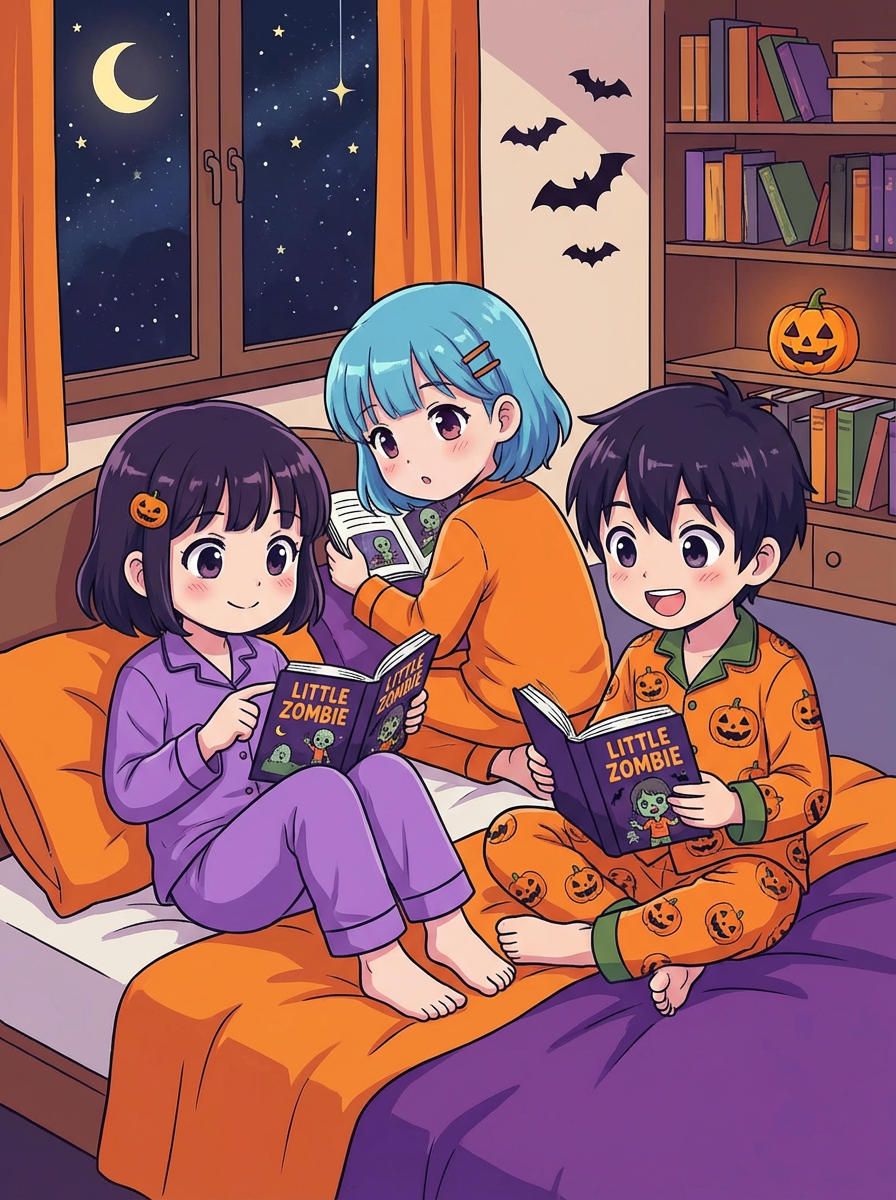
Using Little Zombies Books to Help with Bedtime Anxiety
Bedtime struggles are one of the most common challenges parents face. Whether it’s fear of the dark, separation anxiety, or an overactive imagination, many children experience bedtime anxiety that makes the evening routine stressful for everyone. Surprisingly, “Little Zombies” books—with their gentle spookiness and comforting adventures—can be powerful tools for help with bedtime anxiety. Let’s explore how these stories help children face their nighttime worries and create peaceful transitions to sleep.
Understanding Bedtime Anxiety in Children
Before addressing solutions, it’s important to understand what’s happening when children resist bedtime.
Common Bedtime Fears:
-
-
- Fear of the dark and what might be hiding in it
- Worry about being alone or separated from parents
- Overactive imagination creating scary scenarios
- Anxiety about nightmares or bad dreams
- Fear of missing out on family activities
- General difficulty with transitions and letting go of the day
-
Why Bedtime Is Particularly Challenging: Bedtime represents loss of control for children. The lights go out, parents leave, and they’re alone with their thoughts. For anxious children, this quiet time allows fears to grow larger.
The Counterintuitive Solution: Friendly Spooky Stories
It might seem odd to read spooky stories to anxious children at bedtime, but “Little Zombies” books work because they address fears directly while making them manageable and even fun.
How Little Zombies Help Conquer Bedtime Fears
Making the “Scary” Friendly
The genius of “Little Zombies” is transforming traditionally frightening creatures into lovable characters. When children see zombies as friends rather than monsters, they learn that scary things aren’t always what they seem.
Application to bedtime: If zombies can be friendly, maybe that shadow in the corner isn’t scary either. This reframing helps children question their fearful assumptions.
Providing Predictable Adventure
Children with anxiety crave predictability. “Little Zombies” books offer adventure within safe, predictable structures—the characters face challenges but always work through them successfully.
Application to bedtime: Knowing the little zombies always handle their problems helps children feel confident they can handle their own nighttime worries.
Demonstrating Courage
The little zombies regularly face situations that could be scary, but they approach them with curiosity, teamwork, and bravery. They model healthy responses to fear.
Application to bedtime: Children internalize these brave behaviors and can channel them when facing their own fears: “If the little zombies can be brave, so can I.”
Creating Comfortable Familiarity with Darkness
Many “Little Zombies” adventures take place in settings with shadows, nighttime, or dim lighting—but these settings are portrayed as interesting rather than threatening.
Application to bedtime: Regular exposure to nighttime settings in stories normalizes darkness and reduces its power to frighten.
Building Emotional Vocabulary
The stories give children words for their feelings—worried, nervous, brave, confident. This emotional vocabulary helps them identify and communicate their bedtime fears.
Application to bedtime: When children can name their feelings (“I’m feeling worried like when the little zombie entered the dark cave”), they gain control over those emotions.
Creating a Bedtime Reading Routine
Using “Little Zombies” books effectively for bedtime anxiety requires more than just reading—it requires intentional routine building.
Setting the Stage
Create a calming environment:
-
-
-
-
- Dim the lights gradually rather than suddenly
- Use a reading lamp or nightlight for comfort
- Settle into a cozy reading spot—bed, reading chair, or floor cushions
- Eliminate distractions and create quiet
-
-
-
Timing matters: Start reading 30-45 minutes before lights-out, allowing time for the story, discussion, and wind-down.
The Reading Ritual
Make it consistent:
-
-
-
-
-
- Same time every night
- Same location if possible
- Same general structure (bathroom, pajamas, story, talk, tuck-in)
- Predictability reduces anxiety
-
-
-
-
Read together: Even if your child can read independently, shared reading at bedtime provides comfort and connection that eases separation anxiety.
Post-Reading Discussion
This is where the real anxiety-reducing magic happens. After reading, spend 5-10 minutes talking about the story:
-
-
-
-
-
-
- “What was your favorite part?”
- “Were the little zombies ever scared? How did they handle it?”
- “If you were in the story, what would you do?”
- “What made the scary parts not so scary?”
-
-
-
-
-
These conversations help children process fears in a safe, structured way.
Specific Strategies for Different Anxiety Types
For Fear of the Dark
Use Little Zombies to reframe darkness and help with bedtime anxiety:
-
-
-
-
-
-
-
- Point out how the little zombies navigate dark settings successfully
- Discuss how darkness is just the absence of light, not the presence of danger
- Note the adventures that happen in darkness in the stories
-
-
-
-
-
-
Activity: After reading, play “find the little zombie” in dim light with a stuffed toy, making darkness feel playful rather than threatening.
For Separation Anxiety
Use Little Zombies to build independence:
-
-
-
-
-
-
-
- Highlight moments when characters work independently but know their friends are nearby
- Discuss how the little zombies are brave even when not together
- Emphasize that being alone doesn’t mean being unsafe
-
-
-
-
-
-
Activity: Create a “brave little zombie” plan—what the little zombies would do at bedtime, and how your child can do the same.
For Overactive Imagination
Use Little Zombies to redirect imagination positively and help with bedtime anxiety:
-
-
-
-
-
-
-
- Show how imagination creates fun adventures in the stories
- Practice imagining positive scenarios instead of fearful ones
- Use story characters as “protectors” in imagination
-
-
-
-
-
-
Activity: Ask your child to imagine a “Little Zombies adventure” happening in their room—something fun and safe rather than scary.
For Nightmare Worries
Use Little Zombies to process dream fears:
-
-
-
-
-
-
-
- Discuss how story problems always get solved
- Talk about how the little zombies would handle a bad dream
- Create distinction between stories (controlled) and dreams (uncontrollable but harmless)
-
-
-
-
-
-
Activity: If your child has a nightmare, retell it the next day with little zombies as helpers who solve the problem.
For Fear of Missing Out
Use Little Zombies to validate rest:
-
-
-
-
-
-
-
- Point out when characters rest and recharge in stories
- Discuss how adventures require energy that sleep provides
- Frame sleep as preparation for tomorrow’s adventures
-
-
-
-
-
-
Activity: Create an “adventure journal” where your child records daily adventures and plans tomorrow’s—making sleep the bridge between exciting days.
Practical Bedtime Conversation Starters to Help with Bedtime Anxiety
Use these discussion prompts after reading “Little Zombies” books:
Building courage:
-
-
-
-
-
-
-
-
- “The little zombie was nervous about [situation]. Have you ever felt that way?”
- “What made the little zombie brave enough to try anyway?”
- “If you could tell the little zombie one thing about being brave, what would it be?”
-
-
-
-
-
-
-
Addressing specific fears:
-
-
-
-
-
-
-
-
- “Was anything in this story a little scary? What made it okay in the end?”
- “How did the little zombies make the dark/unknown/new thing less scary?”
- “What would you tell a friend who was scared of [element from story]?”
-
-
-
-
-
-
-
Building confidence:
-
-
-
-
-
-
-
-
- “Which little zombie are you most like?”
- “What’s something brave you did today, just like the little zombies?”
- “Tomorrow, what little zombie adventure might you have?”
-
-
-
-
-
-
-
Additional Comfort Strategies to Help with Bedtime Anxiety
Combine reading with other calming elements:
Physical comfort:
-
-
-
-
-
-
-
-
-
- Favorite stuffed animal or blanket
- Gentle back rubs while reading
- Calm, soothing voice
- Comfortable position
-
-
-
-
-
-
-
-
Environmental adjustments:
-
-
-
-
-
-
-
-
-
- Nightlight featuring story-related themes
- Soft background music
- Comfortable room temperature
- Door left slightly open if that helps
-
-
-
-
-
-
-
-
Transitional objects:
-
-
-
-
-
-
-
-
-
- “Little Zombies” bookmark to “protect” during sleep
- Drawing of favorite character on nightstand
- Story-related item that provides comfort
-
-
-
-
-
-
-
-
When to Read Little Zombies vs. Other Books
Not every night needs to be a “Little Zombies” night. Balance is key:
Little Zombies nights are best for:
-
-
-
-
-
-
-
-
-
-
- Children actively expressing fear or anxiety
- Nights following stressful days
- When building courage is the goal
- Addressing specific fears that match story elements
-
-
-
-
-
-
-
-
-
Other books work better for:
-
-
-
-
-
-
-
-
-
-
- Extremely anxious nights (try calmer, gentler stories)
- Nights when child is already calm
- Variety in routine
- Different developmental focuses
-
-
-
-
-
-
-
-
-
Pay attention to your child’s response and adjust accordingly.
Signs It’s Working
You’ll know “Little Zombies” books are helping with bedtime anxiety when:
-
-
-
-
-
-
-
-
-
-
- Child asks for these books specifically at bedtime
- References story characters when discussing fears
- Uses story language (“I’ll be brave like the little zombies”)
- Bedtime resistance decreases over time
- Child falls asleep more quickly
- Nighttime wake-ups decrease
- Morning reports of better sleep or fewer bad dreams
-
-
-
-
-
-
-
-
-
What If It’s Not Enough?
Books are powerful tools, but they’re not magic solutions. If bedtime anxiety persists despite consistent routines and strategies:
-
-
-
-
-
-
-
-
-
-
- Consult your pediatrician about underlying issues
- Consider whether daytime stress needs addressing
- Evaluate whether bedtime is age-appropriate (some children need earlier or later times)
- Rule out physical discomfort (mattress, temperature, noise)
- Assess overall anxiety levels throughout the day
-
-
-
-
-
-
-
-
-
“Little Zombies” books work best as part of a comprehensive approach to bedtime, not as standalone solutions.
Creating Long-Term Success
Building on the foundation:
As bedtime anxiety decreases, maintain the reading routine but adjust focus:
-
-
-
-
-
-
-
-
-
-
-
- Gradually reduce post-reading discussion time
- Transition to independent reading if age-appropriate
- Continue using story language when anxiety occasionally resurfaces
- Celebrate progress: “Remember when bedtime was hard? Look how brave you’ve become!”
-
-
-
-
-
-
-
-
-
-
The Power of Story in Healing
Stories have been helping humans process fear for thousands of years. “Little Zombies” books tap into this ancient wisdom, providing children with:
-
-
-
-
-
-
-
-
-
-
-
-
- Safe exposure to manageable fears
- Models of courage and problem-solving
- Language for emotions
- Comfort through routine
- Connection through shared reading
-
-
-
-
-
-
-
-
-
-
-
Conclusion
Bedtime anxiety is challenging, but it’s also conquerable. “Little Zombies” books offer a unique approach—embracing the spooky while making it friendly, acknowledging fears while demonstrating courage, and creating adventure while building safety. By incorporating these stories into a consistent, comforting bedtime routine, you give your child tools to face nighttime worries with confidence.
The little zombies show that even creatures associated with darkness and fear can be brave, kind, and successful. If zombies can handle scary situations, your child can handle bedtime. One story at a time, one night at a time, these friendly characters can transform bedtime from a battle into a peaceful close to each day’s adventure.
Sweet dreams, and happy reading!